


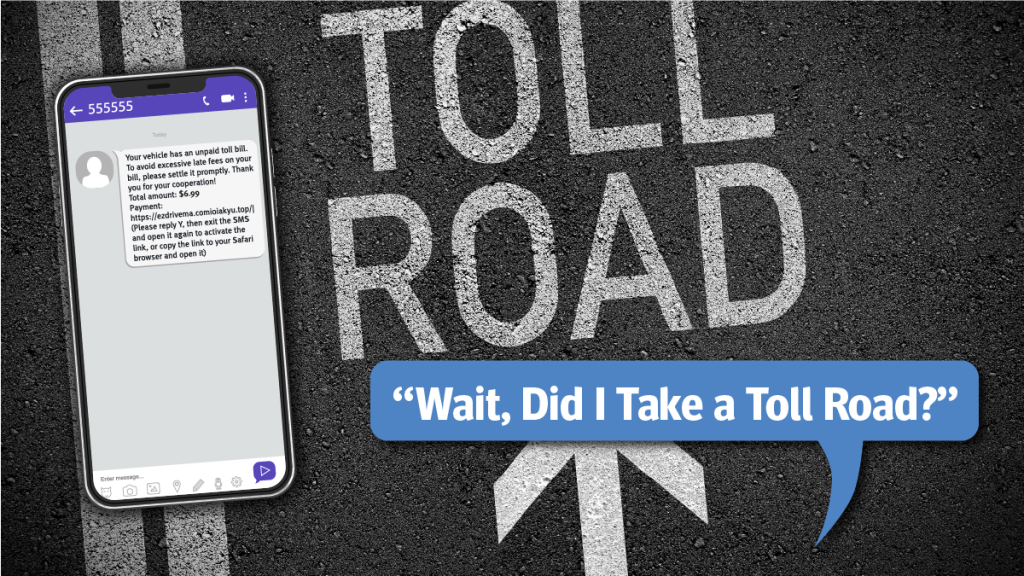
Have you taken a toll road recently? Well, even if you haven’t, this story is for you. There is a text message going around that anyone who drives on highways or freeways should be on the lookout for and it’s just annoying enough to drive anyone mad. As you can guess, it involves toll roads and the supposed accompanying fees related to them. It goes like this.
The Toll Text
A text message appears on your phone stating you owe a toll, and you need to pay it right away. What? You say. You haven’t taken a toll road recently, that you can recall anyway. So, why would you owe a toll? The answer is, you don’t. This scam tries to make you think you owe one and if you don’t pay up, right away, you’ll be assessed some phenomenal penalty.
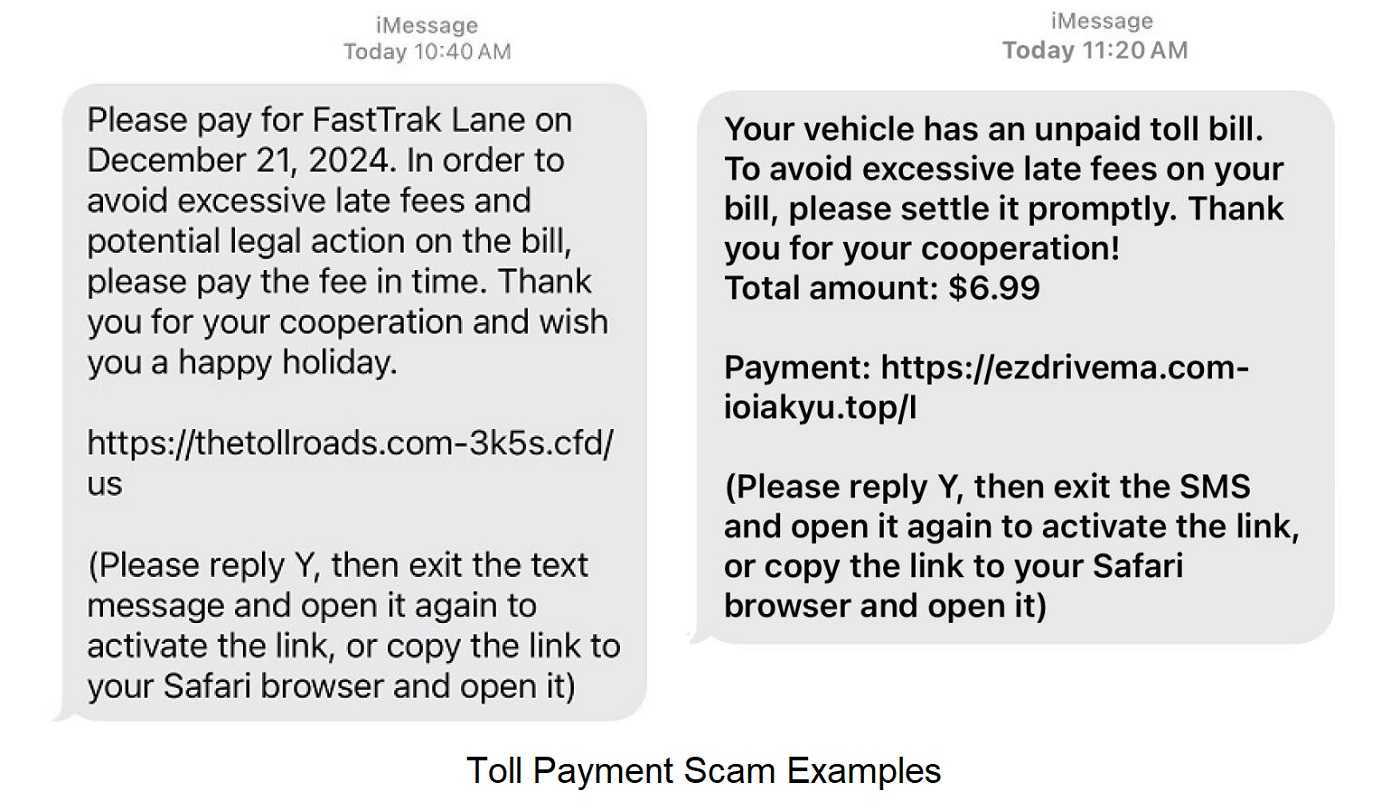
How to Spot the Scam
The first clue that this is a scam, if you haven’t taken a toll road of course, is that you haven’t taken a toll road. The second, is that there is that oh so familiar sense of urgency that phishing scams like to use so much. Yes, if you owe tolls, the time you have to pay matters to avoid penalties, but it’s not an immediate thing, unless there is a booth or you have one of those transponders. In California, you have five days to pay the tolls, for example. And toll agencies aren’t in the habit of sending unsolicited text messages. In fact, if you owe a toll and don’t have a toll road account for wherever you happen to be driving, they don’t even have your phone number. They’ll send you a bill in the regular mail.
The Kansas Turnpike warns, “Be aware of fake messages claiming you have outstanding tolls due on a Kansas toll facility. These messages include a link or URL instructing you to visit a fake website that mimics a KTA or DriveKS web site or a toll web site in another part of the country.” The New York Thruway website has a big warning on the front page of its website, alerting drivers that “E-ZPass or Tolls By Mail WILL NEVER send a text or email requesting sensitive personal information such as credit card, birthday, Social Security number, or other personally identifiable information.”
What To Do
If you do receive one of these, delete it off of your device so there is no chance you’ll accidently click the link. Keep your eyes open for other signs of phishing, such as texts being sent from international phone numbers. And remember to drive safely out there.
Content provided by Stickley on Security.
For more tips on protecting your personal information, visit Mid Oregon’s Security and Fraud Page: https://ow.ly/hjHm50V9XE1