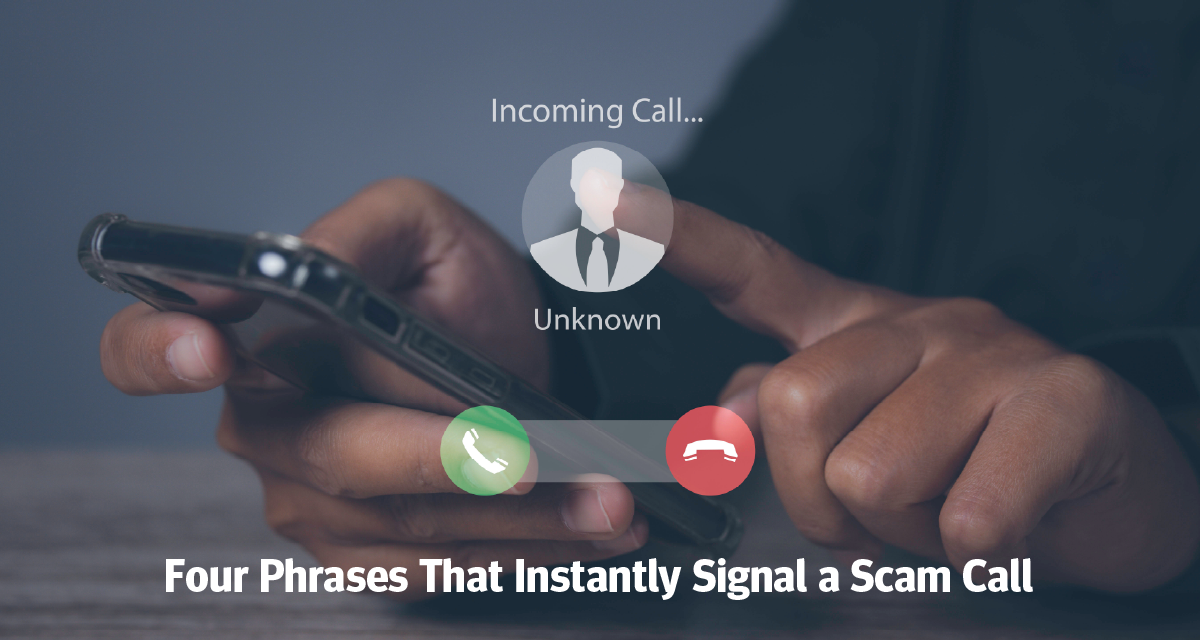
Phone scams have evolved dramatically over the past few years. What once relied on poor scripts and obvious lies is now powered by data breaches, artificial intelligence, and social engineering tactics designed to sound legitimate—even familiar. According to cybersecurity experts and recent reporting, there are four specific phrases that should immediately raise alarm bells.
If you hear any of the phrases below during an unsolicited call, the safest response is simple: hang up.
1. “Can You Hear Me?”
This question sounds polite and harmless, which is exactly why it works. Scammers use it to prompt a clear “Yes,” which they may record and later exploit. With modern AI-driven voice cloning technology, even a short affirmative response can be manipulated to impersonate you or bypass basic voice‑authentication systems.
While not every call that starts this way is a scam, it’s a known tactic used to establish consent—or the illusion of it. Legitimate callers do not need verbal confirmation to continue a call you never requested.
The rule: If an unknown caller opens with this question, don’t answer it. Hang up.
2. “Your Account Will Be Suspended”
Fear is one of the strongest motivators scammers rely on. By threatening the loss of a bank account, online service, delivery, or even government benefits, they create panic and urgency. The goal is to short-circuit your logical thinking and push you into “fixing” the problem immediately.
These calls almost always escalate to requesting sensitive information—login credentials, verification details, or a one‑time passcode sent to your phone. Once you hand that over, they can take control of your account within minutes.
Remember: Legitimate organizations—banks, retailers, and government agencies—do not threaten suspension and demand immediate action over an unsolicited call.
3. “We Need You to Act Now”
Artificial urgency is a hallmark of modern fraud. Scammers know that the more time you have to think or verify, the more likely you are to spot inconsistencies. That’s why they create emergencies: a compromised account, a limited‑time opportunity, or a family crisis.
In more advanced cases, scammers now use AI to mimic the voice of a loved one, creating emotionally charged scenarios that feel real and terrifying. The pressure to act “right now” is intentional—it prevents fact‑checking and clear thinking.
A simple truth: Any legitimate situation allows time for verification. Urgency is a tactic, not a requirement.
4. “Pay via Gift Card or Cryptocurrency”
This is the most definitive sign of a scam. No government agency, utility company, bank, or legitimate business will ever demand payment via gift cards, wire transfers, or cryptocurrency.
These payment methods are irreversible and difficult to trace, which makes them ideal for criminals and useless for victims trying to recover funds. Once the money is sent, it’s effectively gone.
Bottom line: If a caller insists on these payment methods, the call is a scam—no exceptions.
Final Takeaway: When in Doubt, Hang Up
Scammers succeed not because people are careless, but because the tactics are sophisticated and psychologically manipulative. Knowing the warning signs dramatically increases your ability to protect yourself.
You are never rude for hanging up. You are never obligated to respond. And you never have to act immediately on an unsolicited request.
When something feels off, trust that instinct. The safest response is also the easiest one: end the call.
For more tips on protecting your personal information, visit Mid Oregon’s Security and Fraud Page: https://ow.ly/hjHm50V9XE1 [ow.ly].